
Boy Claims to Remember a Hidden Treasure from a Past Life: Researchers Investigate His Story and Discover an Unexpected Detail
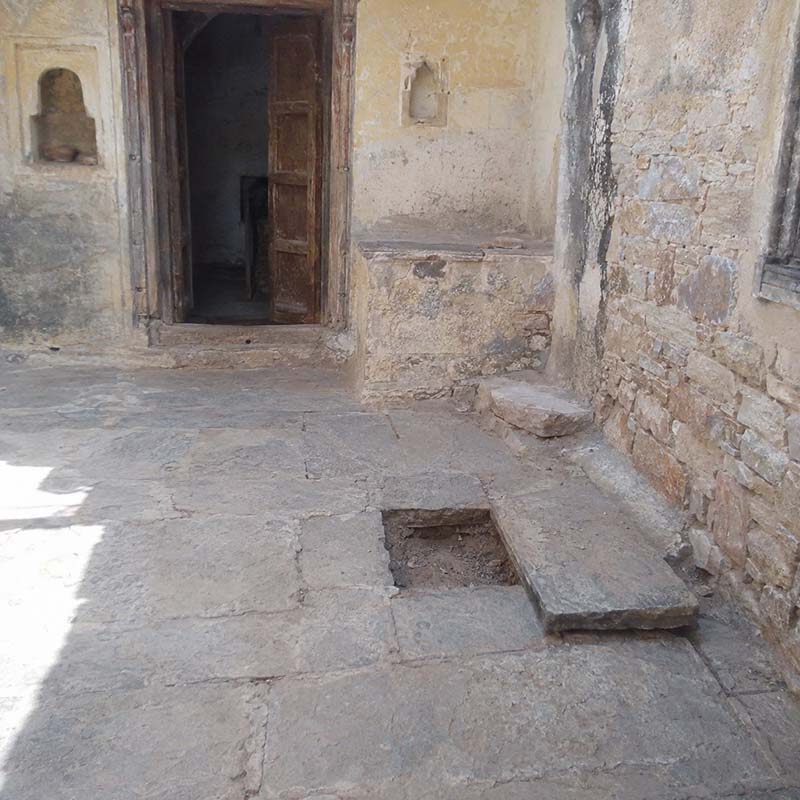
When an eight-year-old boy from the Indian state of Rajasthan began telling his parents about a house where he had supposedly lived in a previous life, they initially dismissed his words as childhood fantasies. However, the child kept returning to the same story: he claimed that he had once been a merchant, had kept family valuables in a hiding place, and had concealed them before being murdered.
According to his parents, the boy named a village, described a narrow courtyard in an old house, and explained that the hiding place was beneath a stone slab near an interior wall. He also insisted that the hidden objects had belonged to his family and that even his close relatives had not known about them. The boy maintained that he had never heard the story from adults.
The case attracted the attention of a team of researchers from the Center for Unusual Memory Studies at the University of Jaipur. The scientists recorded the boy's account before taking him to the alleged location and asked him to describe the layout of the rooms, the courtyard, and the section of wall near which the hiding place was supposedly located. The team then attempted to establish whether the village existed and whether a house matching the description could have stood there.
Several weeks later, the researchers identified a settlement that partially matched the boy's description. One of the old houses had an inner courtyard and stone masonry resembling the structure he had described. The current owners agreed to show the building, but they could not confirm the story about the merchant or the hidden valuables.
The most unexpected detail emerged during the inspection of the courtyard. Beneath one of the stone slabs, the researchers noticed a hollow that resembled a small cavity. When the slab was lifted, an empty space was revealed, large enough to hold small objects. No valuables or other items were found, and the researchers could not establish whether the space had ever been used as a hiding place.
However, the investigation uncovered a significant discrepancy: the boy had described the slab as being next to the wall, whereas the cavity discovered by the team was several steps away from the location he had indicated. According to the researchers, the child had described the courtyard's general layout with reasonable accuracy, but some details did not match. Furthermore, the house had been renovated several times, and only fragmentary records of its history remained.
The researchers also tried to determine whether the boy could have obtained the information through ordinary means. His family insisted that he had never visited the village before the investigation. Nevertheless, the scientists could not completely rule out the possibility that he had overheard conversations, been influenced by adults, or described features common to traditional houses in the region.