
Can Hindu Rituals Suppress Fear? Psychologists Discover an Unexpected Pattern
Psychologists from the Institute of Behavioral Studies at the University of Jaipur analyzed surveys from 2,400 residents of India to investigate whether religious practices are associated with how people experience stress. The study included Hindus with varying levels of religious involvement, as well as people who rarely participated in rituals or did not observe them at all.
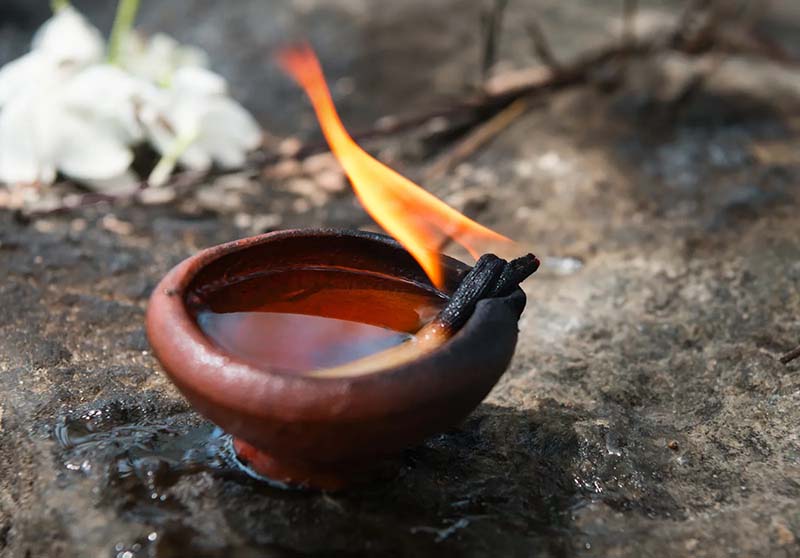
According to the findings, pronounced fear in stressful situations was reported 31% less frequently among believers who recited mantras daily and regularly visited temples than among participants with minimal religious involvement. The strongest association was observed among those who combined prayer with specific rituals, including lighting lamps before deities, making offerings, and repeating sacred formulas at set times.
The researchers suggested that the effect may involve more than faith in divine protection. Repetitive actions can create a sense of predictability and control in circumstances a person cannot change. Rituals provide a familiar sequence of actions, redirect attention, and help reduce uncertainty—one of the factors that can intensify fear.
An especially interesting pattern emerged between the regularity of religious practice and responses to everyday stressors. Participants who had followed the same rituals for at least five years were less likely to report panic before medical procedures, important job interviews, and unexpected life changes. However, the study does not prove that rituals directly reduce fear. Social support, lifestyle, and individual personality traits may also have influenced the results.
The authors believe religious rituals deserve closer attention from psychologists. Their effects may be explained by a combination of mechanisms, ranging from repetitive movements and controlled breathing to a sense of belonging to a religious community. An important question remains: how much do Hindu symbols and beliefs themselves matter, and how much can be attributed to the structure of the ritual?