
French Gallery Receives Threats After Exhibition of Nude Model Portraying Goddess Lakshmi
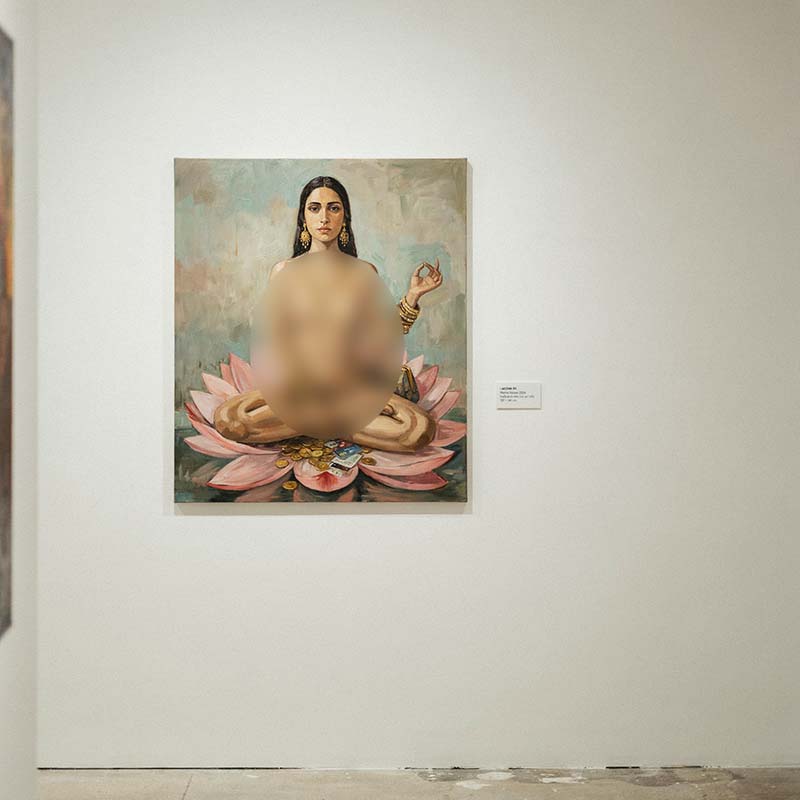
A painting intended as a reflection on beauty, wealth, and consumerism has unexpectedly become the center of a conflict involving the artist, gallery visitors, and members of the Hindu community. The work by French artist Antoine Moreau was presented at a contemporary art exhibition in Albi, a city in southern France. The painting depicts a nude model seated on an open lotus flower, with a pose and jewelry reminiscent of traditional representations of Lakshmi, the goddess of prosperity and well-being.
Moreau says he deliberately moved away from conventional religious imagery to explore how modern societies associate the female body with money, status, and the desire to possess. The artist insists that his work is not intended to mock Hinduism and does not claim to represent the goddess in a theological sense. However, some visitors found his explanation insufficient, viewing the painting as an attempt to provoke controversy by using a sacred image.
The situation escalated after a photograph of the painting was posted on social media. Calls to cancel the exhibition appeared beneath the post, and the gallery subsequently began receiving threatening emails and phone calls. Some messages demanded that the painting be removed immediately and that a public apology be issued. Gallery management notified local authorities and temporarily increased security, declining to disclose details of the threats.
Members of the regional Hindu community said the issue was not nudity itself, but the use of recognizable attributes of Lakshmi outside a religious context. In their view, visitors unfamiliar with Hindu traditions might interpret the painting as an acceptable representation of the goddess herself, despite the artist’s different intentions. Others involved in the debate argued that demands to remove the work turn religious sensitivity into a means of controlling contemporary art.
Gallery director Claire Dumont refused to take the painting down before the exhibition ended but agreed to add an explanatory text outlining the artist’s intentions and the significance of Lakshmi in Hinduism. She emphasized that threats against staff and visitors could not be considered an acceptable way to express disagreement. After the additional explanation was introduced, some critics accused the gallery of trying to justify the provocation, while supporters of the artist saw the decision as an effort to preserve space for discussion.
Moreau himself said he was willing to meet with members of the Hindu community and listen to their objections, but he had no intention of altering the work under pressure. The gallery is now deciding how to conduct the remaining days of the exhibition without further incidents. The controversy has moved beyond an artistic dispute, raising a broader question for organizers: where does the boundary lie between freedom of artistic expression and responsibility for using religious symbols that remain part of a living faith for millions of people?