
'Sacrifice a Virtual Goat First': BJP MLA Nitesh Rane Slams Critics of Hindu Festivals
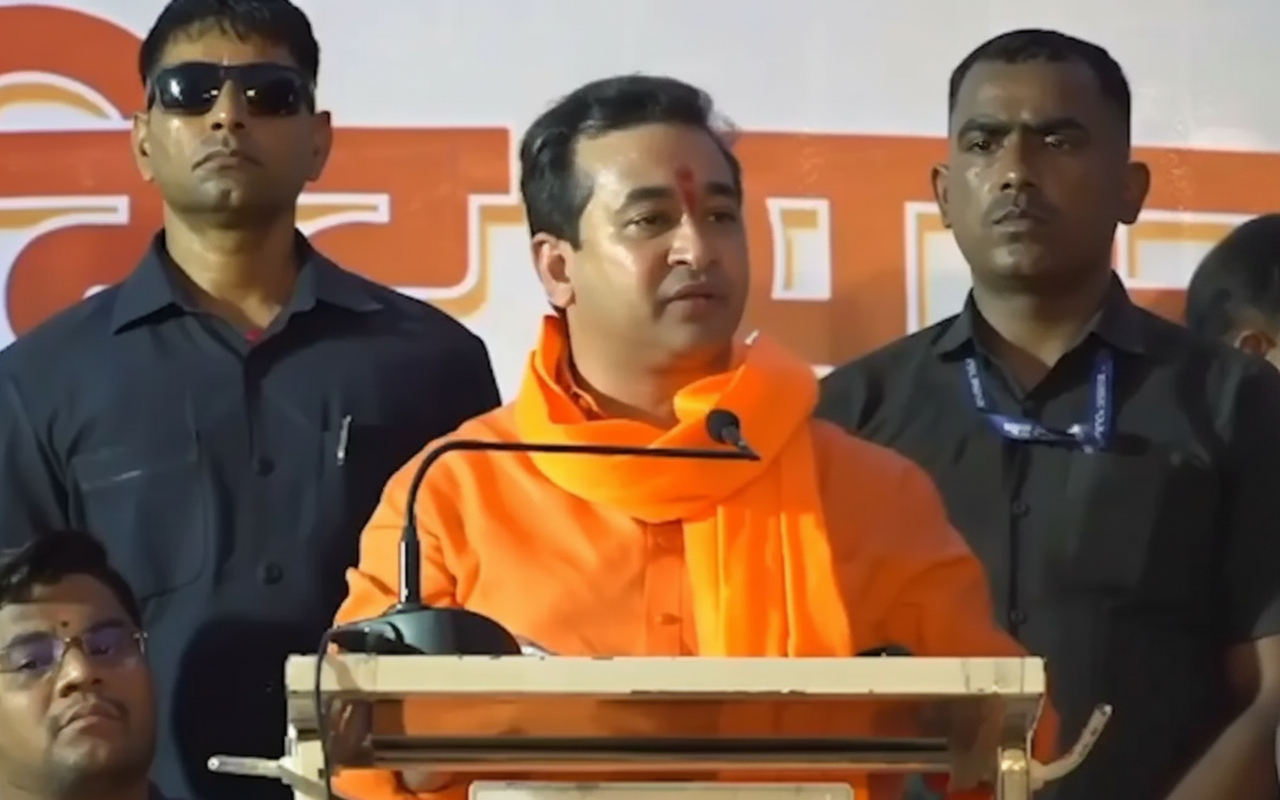
A major political and cultural controversy has erupted in Maharashtra following sharp remarks by Bharatiya Janata Party (BJP) MLA Nitesh Rane regarding selective environmental activism targeting Hindu festivals.
Addressing a gathering, the lawmaker lashed out at non-governmental organizations (NGOs) and activists who routinely push for restrictions on water usage during Holi and firecrackers during Diwali, demanding that similar standards of "eco-friendliness" be applied to other religious celebrations.
The Debate on Selective Activism
Rane expressed severe frustration over what sections of the Hindu community perceive as a one-sided narrative on environmental protection. He argued that traditional celebrations are being micro-managed under the guise of social consciousness while practices in other communities remain unchecked.
Directing his criticism toward the upcoming Muslim festival of Eid al-Adha (Bakrid), Rane stated:
"Those who come out to lecture us during our festivals, telling us to play a 'dry Holi' to save water or to avoid crackers on Diwali, should lead by example. If you care so much about the environment and living beings, then for the upcoming Bakrid festival, do not slaughter real animals. Put a photo of a goat on a computer screen and sacrifice it virtually."
The lawmaker asserted that cultural and religious traditions should not be subjected to selective scrutiny by state authorities or social commentators, and that the emotional sentiments of the majority community must be respected equally.
Political Fallout and Counter-Reactions
The controversial remarks have triggered a sharp ideological divide across Maharashtra’s political circles:
- Opposition Condemnation: Leaders from the opposition Maha Vikas Aghadi (MVA) alliance quickly slammed Rane's comments, accusing the BJP leader of deliberately making polarising and provocative statements to stoke communal tensions ahead of local administrative polls.
- Support from Traditional Outfits: Conversely, several right-wing Hindu organizations have backed Rane's stance, agreeing that state advisories and activist campaigns disproportionately target Hindu rituals while staying silent on massive water wastage or animal slaughter associated with other festivals.
Context of the Regulatory Framework
The dispute highlights a long-standing debate in India regarding public interest litigation and judicial interventions during major festivals.
Over the years, various state high courts and environmental tribunals have instituted strict guidelines on noise and air pollution during Diwali and promoted minimal water consumption for Holi. However, enforced regulations face consistent pushback from groups who argue that administrative bodies should focus on systemic municipal water mismanagement and industrial pollution rather than restricting civilizational traditions.