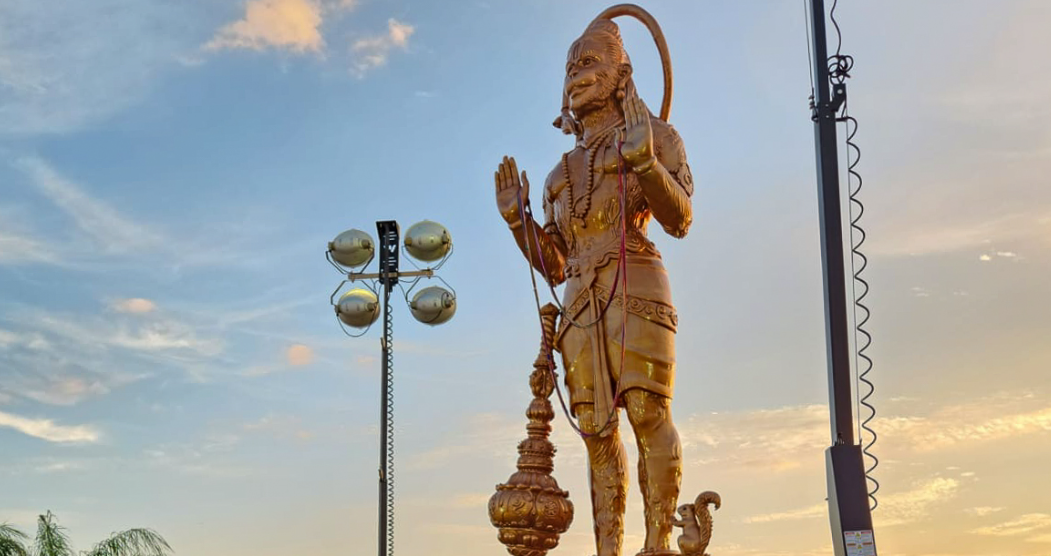
Standing Firm Against Hinduphobia: Lessons in Resilience and Pluralism
In recent months, public discussions in the United States have highlighted a troubling pattern of Hinduphobia. Incidents ranging from systemic opposition to a sacred Hanuman statue in Texas to the targeting of Hindu political candidates reflect a deeper prejudice against the visible presence of Hindu identity in Western public life.
The Texas Hanuman Statue Controversy
The public pushback against the construction of a Hanuman statue in Texas serves as a clear indicator of religious intolerance. For billions of Hindus worldwide, Lord Hanuman is a sacred symbol of:
- Devotion and loyalty
- Courage and inner strength
- Selfless service
Yet, this spiritual project faced immediate hostility. Public opposition and social media commentary frequently included targeted remarks:
"Why bring Hindu gods here? This is not American culture."
"These giant statues don't belong in our country."
Such reactions demonstrate that public objections often mask deep-seated cultural prejudice rather than legitimate community or zoning concerns.
Political Profiling of Hindu Candidates
A parallel trend is visible in the political arena, where Hindu candidates face unfair scrutiny regarding their background and faith. Instead of being evaluated on their professional qualifications or civic platforms, they frequently confront xenophobic insinuations:
- The "Dual Loyalty" Trope: Candidates face leading questions like "Where does their loyalty lie?", suggesting that practicing Hinduism conflicts with national service.
- Marginalization: Public discourse often reduces their identity to a foreign stereotype rather than acknowledging their constitutional right to run for public office.
In a truly pluralistic society, individuals must be judged on their leadership and commitment to public service, not vilified for openly practicing their Hindu dharma.
Root Causes and the Path Forward
This hostility arises from a broader climate of religious bigotry, where a lack of education turns into fear and prejudice. In contrast to this exclusionary mindset, Hindu civilization has historically championed pluralism and intellectual openness, a principle explicitly stated in the Rig Veda (1.89.1):
“आ नो भद्राः क्रतवो यन्तु विश्वतः”
(Aano bhadraah kratavo yantu vishwatah)
"Let noble thoughts come to us from all directions."
This ancient worldview welcomes global wisdom while remaining firmly rooted in dharma—a constructive spirit that Hindu communities actively bring to Western civic life.
Addressing contemporary Hinduphobia requires a sustained strategy focused on three key areas:
- Education: Dismantling stereotypes through accurate representations of Hindu traditions in schools and media.
- Vigilance: Documenting and legally challenging instances of bias, hate speech, and discrimination.
- Civic Engagement: Building bridges with other communities to foster a pluralistic society where every individual can practice their faith with dignity.