
UK Temple Takes City Council to Court Over Hindu Deity Statue on Its Facade
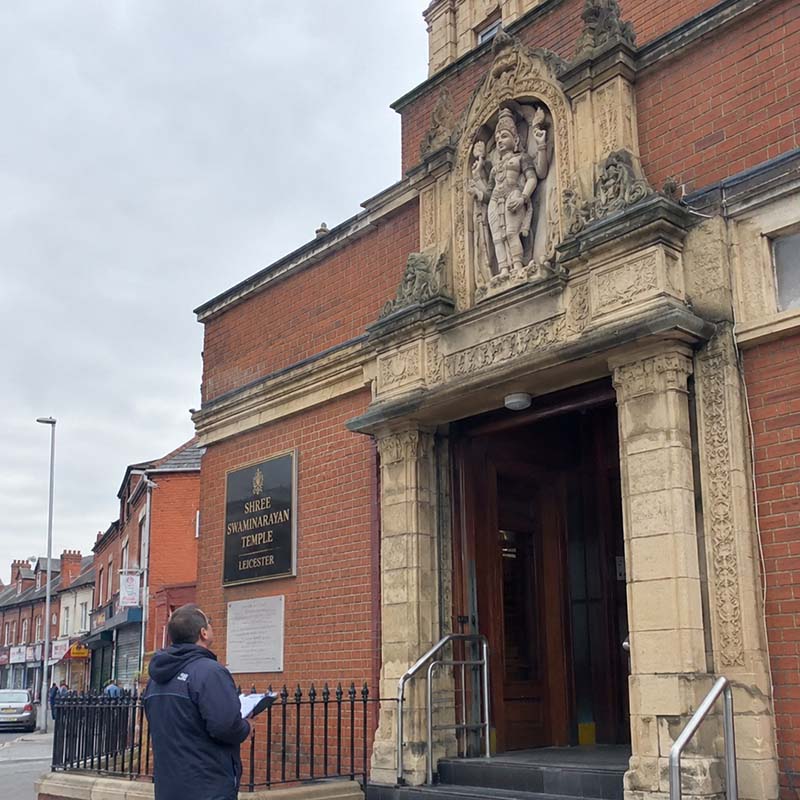
A dispute over the facade of a Hindu temple in Leicester has escalated into legal proceedings after the city council demanded the removal of a stone statue of a deity installed above the main entrance. The sculpture was added several years ago during renovations and quickly became a recognizable feature of the local Hindu neighborhood. However, following an inspection, municipal officials stated that the work had altered the building’s exterior without the required approval.
According to the authorities, the issue is not the religious meaning of the image but the fact that the building is located in an area subject to special architectural preservation requirements. The council maintains that the installation of a large sculpture altered the historic facade and that permission for such modifications had not been obtained. The temple was asked to remove the statue voluntarily and warned that the matter would otherwise be taken to court.
The temple’s leadership refused to comply. Representatives said the statue had been paid for through donations from worshippers and consecrated during a special ceremony. In their view, it is not merely a decorative feature that can be moved elsewhere without consequences, but a symbol of spiritual significance. They argue that relocating the sculpture would require a separate religious ritual and would effectively deprive the facade of its familiar function for worshippers.
The situation has sparked disagreement even among residents of nearby streets. Some have supported the temple, arguing that religious buildings should be allowed to preserve their distinctive appearance, particularly when there is no safety risk. Others insist that historic preservation rules should apply equally to all organizations, regardless of their religious affiliation.
In court, the temple’s representatives asked the judge to rule that the removal order was disproportionate and to consider allowing the existing modifications to be approved retroactively. The city council, meanwhile, argued that granting an exception to a religious institution could set a precedent for other property owners in the protected area. The court ordered a review of the circumstances surrounding the statue’s installation and the documents governing facade alterations before issuing a final decision.
While the proceedings continue, the sculpture remains in place. The outcome could influence how British local authorities handle conflicts between religious communities’ needs and requirements for preserving historic buildings.