
Van Gogh’s Final Painting Concealed a Mysterious Symbol of Rebirth — What Does Ancient India Have to Do With It?
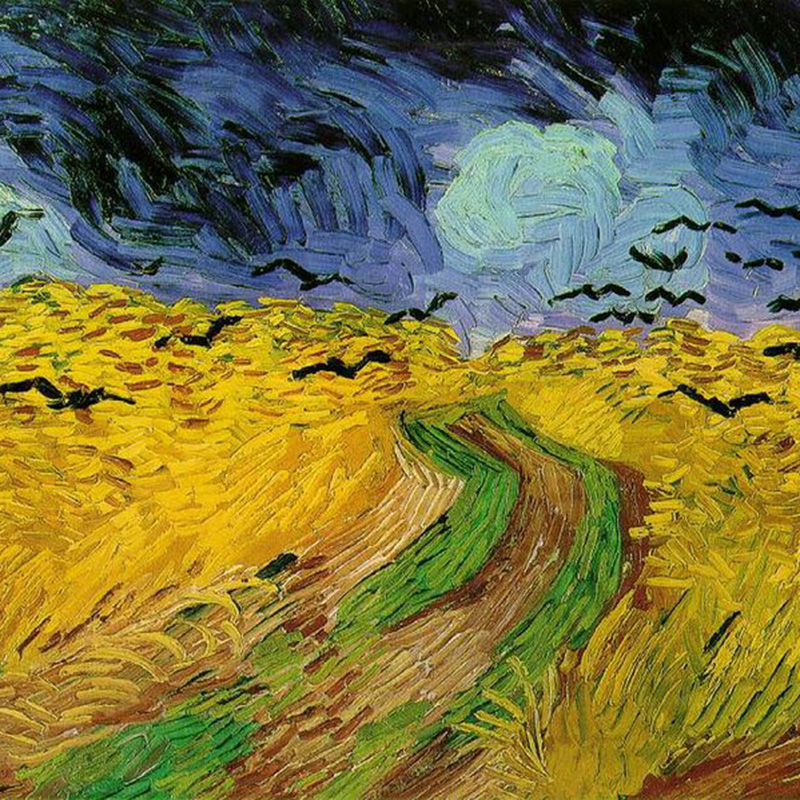
While examining Wheatfield with Crows, specialists noticed unusual outlines beneath the canvas’s surface. Technical imaging revealed part of an earlier drawing: a circular shape with radiating lines, partially concealed by the final brushstrokes. Some researchers compared it to the concept of samsara — the cycle of birth, death, and rebirth that lies at the heart of Hindu beliefs about existence. The resemblance alone does not prove that Van Gogh drew inspiration from Indian philosophy. There is no known evidence that the artist studied Hindu texts in depth, and circular motifs had appeared in European art long before his time. However, the discovery took on a new significance after a letter dating from the final months of the artist’s life came to light. The document had been kept among the papers of a French collector who acquired works of art in the late nineteenth century. The letter, whose authorship has yet to be established, referred to a “sign that returns a person to the beginning” and stated that Van Gogh had refused to include it in the finished painting. The artwork was not named, but the date coincided with the period when he was working on Wheatfield with Crows.
The most provocative theory emerged after researchers compared the concealed lines with Indian depictions of the wheel of samsara. If the connection is confirmed, it would raise a new question about the artist’s final creative explorations: could Van Gogh have encountered Eastern ideas through books, reproductions, or conversations with European collectors? So far, researchers have found no source that would explain such a connection.
Skeptics warn against treating visual similarities as proof of a hidden message. Nevertheless, the combination of the concealed drawing and the mysterious letter has prompted renewed interest in archives connected to Van Gogh’s final years. The central mystery is no longer just what the artist painted over, but why he chose to abandon the image. Was it simply an ordinary stage in the creative process — or a symbol whose meaning he never wanted to reveal?